
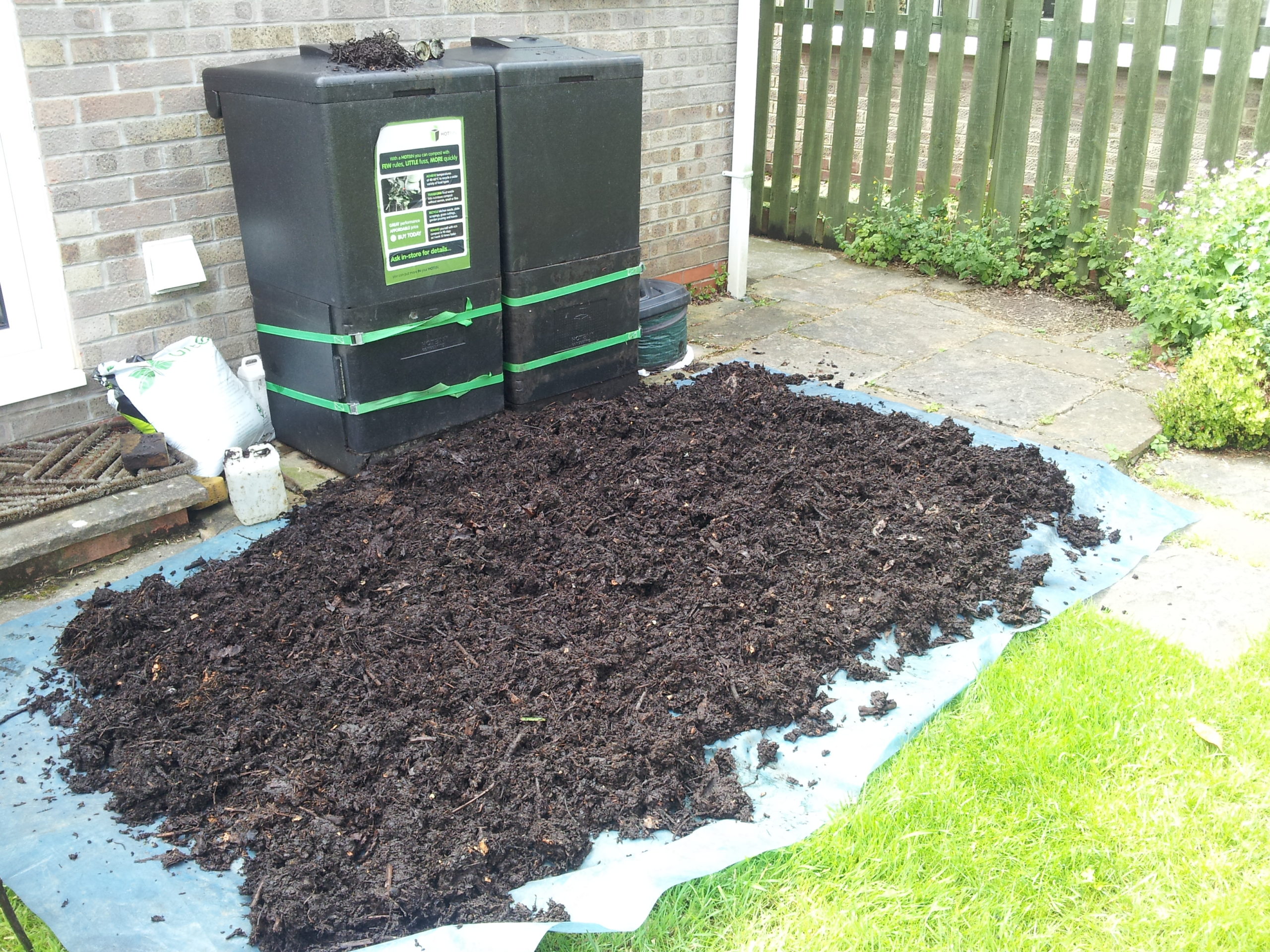
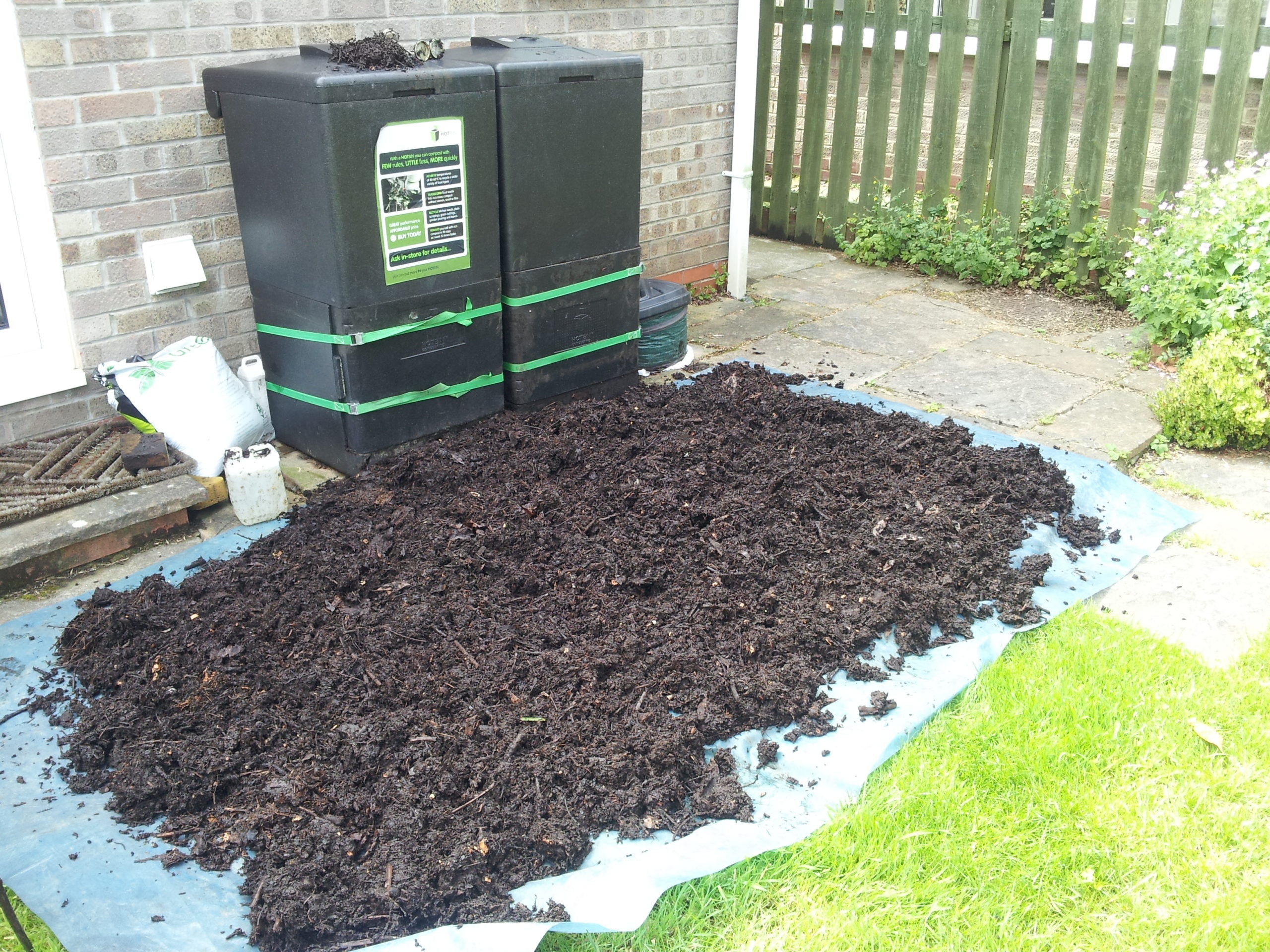
– how one sticky compost sparked a new set of biochar-compost products
Some businesses begin with a business plan. SoilFixer began with a mystery — a sticky mystery.
After a few years developing HOTBIN, Tony Callaghan had become intimately familiar with how organic matter behaves under heat. But one day, while comparing different batches, he noticed something unusual:
HOTBIN compost was noticeably stickier than shop-bought compost or PAS100 green-waste compost.
It clumped differently.
It held water differently.
It behaved differently.
This simple observation set Tony on a decade-long investigation that would ultimately lead to a patent, a new class of biochar-humus composite, and the launch of SoilFixer as a business.

A Simple Question: Is One Compost Really Better Than Another?
The sticky HOTBIN compost triggered a deceptively simple question:
Is one compost better than another? And if so, why?
Is there such a thing as the world’s best compost?
If better compost exists, then there must be a reason: a mechanism, a chemistry, a structure, a process.
Tony went looking.
A Deep Dive Into Composting Knowledge — From 1930 to Today
The quest took him down every historical and scientific rabbit hole imaginable:
- The early pioneers, like Sir A Howard (1930s aerobic compost methods).
- The biodynamic movement with its preparations and theories.
- The many claims around lime, rock dust, and high-heat composting.
- Modern agricultural chemistry.
- Soil biology and microbial ecology.
But the further Tony looked, the more one term kept reappearing — sometimes clearly described, sometimes vaguely hand-waved:
“Humus.”
What was it?
Why did it matter?
And why did some composts produce more of it?
The Humus Detour That Became a Career
A “quick look” at humus chemistry became a multi-year detour.
Tony dived into sources such as Stevenson’s foundational work on humic substances, moving through to modern understandings of dissolved organic matter, microbial necromass, aggregation chemistry, and the conditions under which humus actually forms.
The more he read, the clearer things became:
- Humus is not magic — it is chemistry.
- Humus is not guaranteed — most compost contains far less than people assume.
- Humus is central to soil fertility, structure, and water dynamics.
When Tony dissected and analysed composts — washing, filtering, measuring, comparing textures and fractions — a simple pattern emerged:
- Typical PAS100 compost contained ~5% humic colloids.
- HOTBIN compost is frequently measured at ~10% — roughly double.
For the first time, the “stickiness mystery” made sense.
The difference was humus.
Amazonian Dark Earth & Biochar
While exploring humus chemistry, Tony’s research kept bumping into a parallel story: Terra Preta and Amazonian Dark Earths.

These ancient soils were famous for:
- High stability
- High fertility
- High carbon content
- Remarkable longevity
And at the centre of their profile was biochar — carbonised organic matter that persists for centuries.
This raised another question:
Could biochar be a key ingredient in creating truly high-performance compost and soil?
The climate literature added fuel to the fire: biochar was increasingly recognised as one of the most promising tools for carbon sequestration — a route to improving soil health and pulling CO₂ out of the atmosphere.
Yet the results in practice were mixed. Some growers saw benefits; others saw setbacks. Tony’s own early tests revealed what many had quietly suspected:
Raw biochar added directly to soil can occasionally cause plant issues.
The missing piece appeared again in the compost pile.
Biochar + Composting = The Breakthrough
Over time, laboratory data and field results converged: adding biochar into the composting process — not after — transformed both materials.
Biochar acted as:
- A microbial refuge
- A moisture buffer
- A site of accelerated humus formation
- A carrier for stable nutrient forms
- A structural enhancer for aggregation
The composting process simultaneously “charged” and transformed the biochar, producing something far superior to either material alone.
It wasn’t just compost anymore.
It wasn’t just biochar either.
It was a new class of biochar-humus composite — the foundation of what would become the SoilFixer range.
The Patent: Manufacturing Colloidal Humus
By this point, Tony had tested dozens of configurations and had built a clear picture of how to:
- Accelerate humus formation
- Stabilise humic colloids
- Integrate biochar into a composite structure
- Improve soil water retention and nutrient cycling
The chemistry was sound.
The process was repeatable.
The performance was measurable.
Tony filed a patent for a method of producing colloidal humus — a missing link between compost and true soil regeneration.
SoilFixer Is Born
With the science solid and the product prototypes validated, Tony launched SoilFixer Ltd — not as a compost company, but as a soil-improvement company built on evidence.
Over the years, SoilFixer released products such as:
- SF40 — biochar-enriched PAS100 fines
- SF60 — higher-performance structured biochar composite
- Specialist humus-rich amendments for growers and gardeners
Every product built on the same principle: humus first, carbon stability second, structure third.
A New Chapter: Passing the Reins
In March 2025, after more than a decade of R&D and commercial build-out, Tony passed the reins of SoilFixer to Alex and Tom Brodie, ensuring the next phase would have the operational energy and manufacturing capability to scale.
Tony continues to support the team in a strategic and stewardship role, focusing on innovation, testing, and long-term soil health outcomes.
From Sticky Compost to Soil Futures
SoilFixer began with one sticky batch of compost and a simple, stubborn question:
“Why is this different?”
The answer turned into a journey through 90 years of composting history, humus chemistry, Amazonian soils, biochar science, and climate strategy.
Today, SoilFixer stands as a pioneer at the intersection of compost engineering, humus formation, and biochar-carbon innovation — built on the belief that healthier soils are possible when science leads the way.